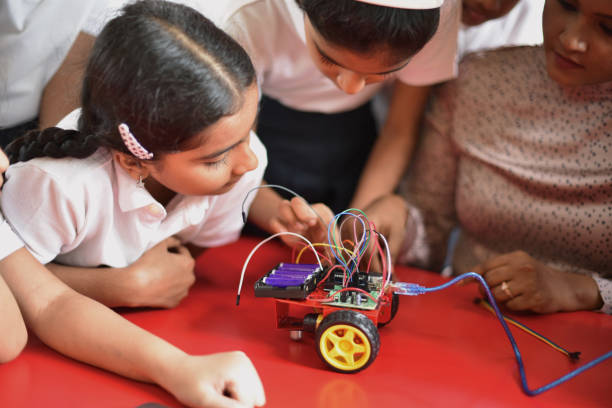
Science kits are a fantastic way to engage children with the wonders of the scientific world. They provide hands-on experience, stimulate curiosity, and encourage problem-solving skills. As the importance of STEM education continues to grow, science kits have become more popular than ever. They are an excellent resource for parents and educators looking to enhance a child’s learning experience beyond the classroom. This guide will explore the benefits of science kits, how to choose the right one, and various types available to cater to different interests and age groups.
Benefits of Science Kits for Kids
Science kits offer numerous benefits, making them an invaluable part of a child’s educational journey:
- Hands-On Learning: Children learn best when they can interact with materials. Science kits provide the tools for experimentation, allowing kids to experience science firsthand.
- Encourages Curiosity: These kits often pose questions and challenges that spark a child’s natural curiosity, leading them to explore and discover.
- Develops Critical Thinking: Working through experiments helps develop problem-solving skills and critical thinking.
- Enhances STEM Skills: Science kits cover a range of STEM topics, from chemistry and physics to biology and engineering.
- Boosts Confidence: Successfully completing experiments can boost a child’s confidence in their abilities.
Choosing the Right Science Kit
Selecting the right science kit can be challenging with the vast array of options available. Here are some factors to consider:
Age Appropriateness
Ensure the kit is suitable for the child’s age group. Kits designed for older children may contain small parts or complex instructions that are not suitable for younger kids.
Interest and Subject Matter
Consider the child’s interests. If they are fascinated by space, a kit focused on astronomy would be ideal. For those interested in chemistry, a chemistry set might be more appealing.
Educational Value
Look for kits that offer educational value and align with what the child is learning in school. Kits that complement school subjects can reinforce their learning and understanding.
Quality and Safety
Choose kits from reputable brands known for quality and safety. Ensure that all materials are non-toxic and safe for children to use.
Types of Science Kits
Science kits come in various types, each catering to different scientific disciplines and interests. Some popular categories include:
- Chemistry Kits: These kits often include beakers, test tubes, and chemicals for safe experiments, teaching children about chemical reactions and properties.
- Physics Kits: Ideal for understanding the laws of motion, energy, and mechanics, these kits might include components like pulleys, levers, and small motors.
- Biology Kits: Typically include items such as microscopes and plant specimens, allowing children to explore the living world around them.
- Engineering Kits: These kits often involve building models or structures, helping kids understand engineering principles.
- Electronic Kits: Perfect for budding inventors, these kits teach basic electronics and circuitry, often using components like LEDs and circuit boards.
For those looking to explore a wide selection of science kits for kids, numerous options are available online, offering something for every budding scientist.
Conclusion
Science kits are more than just educational toys; they are gateways to discovery and learning. By engaging children with hands-on activities, these kits help cultivate a lifelong love for science and exploration. Whether a child is conducting a simple chemical reaction or building a complex model, science kits provide the tools and inspiration needed to foster their scientific curiosity. By carefully selecting a kit that matches the child’s interests and educational needs, parents and educators can help unlock the wonders of the scientific world for the next generation.